
Spectating Play: Theatre, RPGs, and Critical Spectatorship
Nicholas Orvis discusses the links between theatre and role-playing; what it means to perform and to watch others performing.
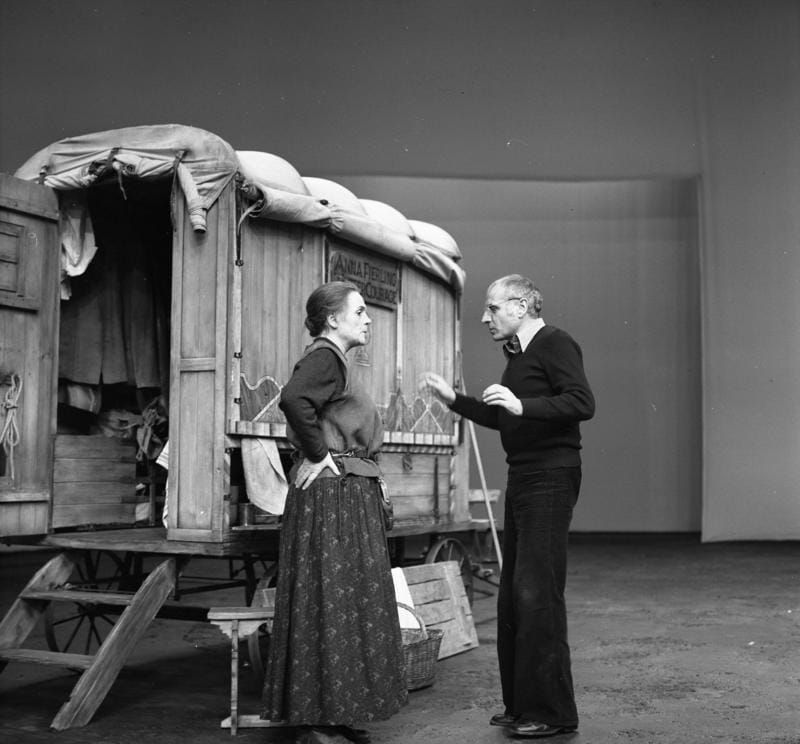
Nicholas Orvis discusses the links between theatre and role-playing; what it means to perform and to watch others performing.
Theatre and role-playing games (RPGs) seem at first blush easy bedfellows. After all, both are ways to “play pretend” as adults, and both involve performance. Role-players are frequently encouraged to take improv classes to sharpen their skills, and the professional arts backgrounds of many high-profile actual play performers (e.g. the casts of Dimension 20 and Critical Role) are well-known.
Scholarship on these connections is relatively scanty: Sarah Lynne Bowman, one of the foundational US voices of role-playing scholarship, has explored some psychological corollaries between the theatrical and RPG practices, commenting that they are “clearly similar, if not identical,” and more recently Mike Sell has applied a dramaturgical lens to the act of playing tabletop role-playing games (TRPGs), arguing that “The tabletop roleplaying game […] is arguably the most popular theatrical form in history.”1 Yet the two forms are different: we engage with them in different ways, they have different standards of practice and expected procedures, and—perhaps most importantly—they mean differently, literally making meaning through different methods.
Theatre is an art of re-presentation, of displaying a world or a way of being for a spectator; RPGs, by contrast, are about inhabiting one. By disentangling the way in which the two forms are like and unlike, we can expand the horizons of possibility for both art practices—and by blending the two modes of engagement, immersive play with critical spectatorship, we may be able to create live experiences that push in playful ways toward personal and social ideas of liberation.
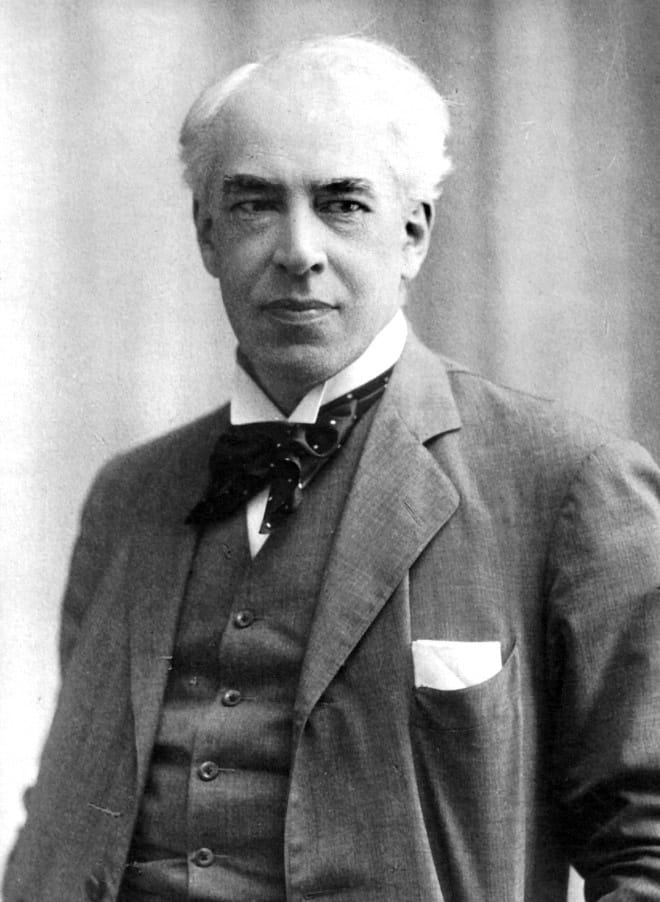
Fundamentally, theatre and RPGs are united in their reliance on impersonation.2 Without a shift in identity and character, RPGs would simply be collective storytelling or tactical wargames, and the Western theatre tradition would never have moved past choral singing. (Tradition has it that the innovation of Thespis, the first actor of Greek tragedy, was not to perform in front of others but to step out from the dithyrambic chorus and pretend to be someone else.)
This foundational, perhaps innately human act of pretending is described in one clinical psychology text as “a range of activities characterized by involving participants in ‘as-if’ or ‘simulated’ actions and circumstances.”3 Konstantin Stanislavski’s widespread methods of actor training include a clearly similar notion: the “magic if.” In An Actor Prepares, Stanislavski says, through his alter-ego acting teacher Tortsov, “For actors, ‘if’ is the lever which lifts us out of the world of reality into the only world where we can be creative. […] in complex plays, there are a huge number of possible ‘ifs’, created by the author and others, so as to justify this or that line of behaviour in the leading characters […] This word is not a statement, it’s a question to be answered. The actor must try to answer it.”4 This very basic project of imagination lies at the heart of all representational performance, theatre and RPG alike.
Beyond that basic act, there are several practical similarities between the processes of theatre and RPGs. Both are deeply embodied—the performance of theatre obviously so, while RPGs are clearly embodied in larp but still involve the body, consciously or subconsciously, in other modes.5 Both forms also rely on complex, multi-layered collective authorship (playwright, director, designers, and performers in theatre; designers/publishers, game masters, and players in RPGs).6 Perhaps most potently, both forms are live, even if elements of them have been rehearsed. This means that an important part of the authoring of a performance happens in real time, unfolding improvisatorially around the table, onstage, or across the digital interface. Because RPGs (like theatre) come into being over the real time of their performance, they also require not just collaboration but attention to one’s coauthors. In their process, then, many RPGs do resemble improvisatory theatre; one point of comparison is the Italian commedia dell’arte, which similarly leveraged broad roles, outlines of action called canovacci, and a reliance on improvisation and close awareness between the performers.
But are they theatre? There is a crucial difference between the two forms. Philosopher Paul Woodruff calls theatre the art “of watching and being watched,” requiring both a performer and a viewer.7 RPGs are conventionally a closed circuit, comprising performance between and for the sake of the performers only, the recent development of actual play notwithstanding. This difference—in mindset and in practices—points to productive gaps between theatre and RPGs. These gaps have prompted different techniques for handling the strange and thrilling liberatory potential of pretending to be a different person, and the different approaches offer much to one another.
The Individual at Play: Bleed and Wyrding the Self
One of the fruitful gaps between theatre and RPGs is the navigation of bleed, an intimate experience that theatre largely lacks specific language for. “Bleed” (coined by larp theorist Emily Care Boss) refers to “a phenomenon in which content experienced as the character continues to affect the player after role-play has ended.” Larpers often discuss bleed in the “reverse” direction, from player into character, as well.8 As an industry, the professional theatre has both a broad awareness of bleed and a shockingly profound lack of language for it. In professional training there is no agreed-upon term for the phenomenon. But actors do manage, and even cultivate, bleed carefully.
Western actor training frequently uses bleed in the production of performance. Affective memory, for instance, a core technique of the Method, involves remembering an actor’s lived emotional state to experience the same in-character.9 Unlike when a role-player feels grief at the death of a friend’s character during a session of D&D, though, a professional actor needs to be able to repeat the emotionally and psychologically stressful experience the next day (or even a few hours later). As a result, many performers have rituals to separate themselves from a character at the end of their performance, processing the emotional fallout and conflicting identities quickly for the sake of resting and preparing to go through the experience again. These techniques, however, appear mostly idiosyncratic and individual; rarely are actors rigorously trained in managing the bleed that occurs between character and performer. There have been periodic calls for such training from scholars working in performance pedagogy and (more recently) intimacy direction, but they remain relatively fringe.10
But while bleed in the theatre is a risky byproduct of the acting process, in the world of RPGs it is often the central goal of a game. Role-players seek out bleed because it has the potential to transform the participant’s experience and their understanding of themselves; it’s a way to consider how one’s life, one’s world, one’s very person could be differently.
Many larpers and larp scholars have argued for the potentially transformative effects of bleed, particularly when deliberately cultivated.11 One of the best examples of this is Jonaya Kemper’s concept of emancipatory bleed. Kemper first coined the term “emancipatory bleed” in a 2017 essay reflecting on their experience as a Black player engaging with a Jane Austen-themed larp. Kemper had subverted some of the larp’s expectations (and infrastructure) in order for their character to derive a sense of satisfaction and agency that they did not feel at its beginning.12 She elaborated on these ideas in an essay for the online conference Solmukohta 2020, defining emancipatory bleed as “the feeling of liberation that comes from being able to fight back against or succeed against a systematic oppression, or allows you to notice those things that have held you back.”13
Kemper theorizes emancipatory bleed as a way for role-players (particularly marginalized ones) to actively shape and construct their identities through larp, a process she calls “wyrding the self.” “Wyrding” is derived from the Anglo-Saxon “wyrd,” a term meaning both “fate or destiny” and connoting (through its etymology) the idea of “becoming” or “coming into being”; thus, in Kemper’s thinking, to wyrdthe self is to become weird to dominant power structures, to “decolonize your body from the mythical norm, and begin the process of identity alteration.”14
Kemper’s proposed tactics to wyrd the self are, in their most thorough form, labor-intensive, drawn from autoethnography techniques.15 Many of their proposals, however, have become widespread in RPG practice even among casual gamers. Journaling is already common in larp spaces and many solo RPGs heavily involve journaling (e.g. Tim Hutchings’s Thousand Year Old Vampire or Anna Blackwell’s Apothecaria). Long-running TRPGs also frequently include player journals, albeit typically more oriented toward note-taking than emotional/psychological reflection. The act of journaling, which externalizes the experience of play, helps to create the critical distance that can allow for wyrding the self. Similarly, many players create ephemeral mementoes of their time in a role-playing experience: character sketches, tokens to give other players, props, etc. These ephemera form a network of affective memory after the role-play is over, inviting reflection and possible re-orientation of the player toward emancipatory bleed.
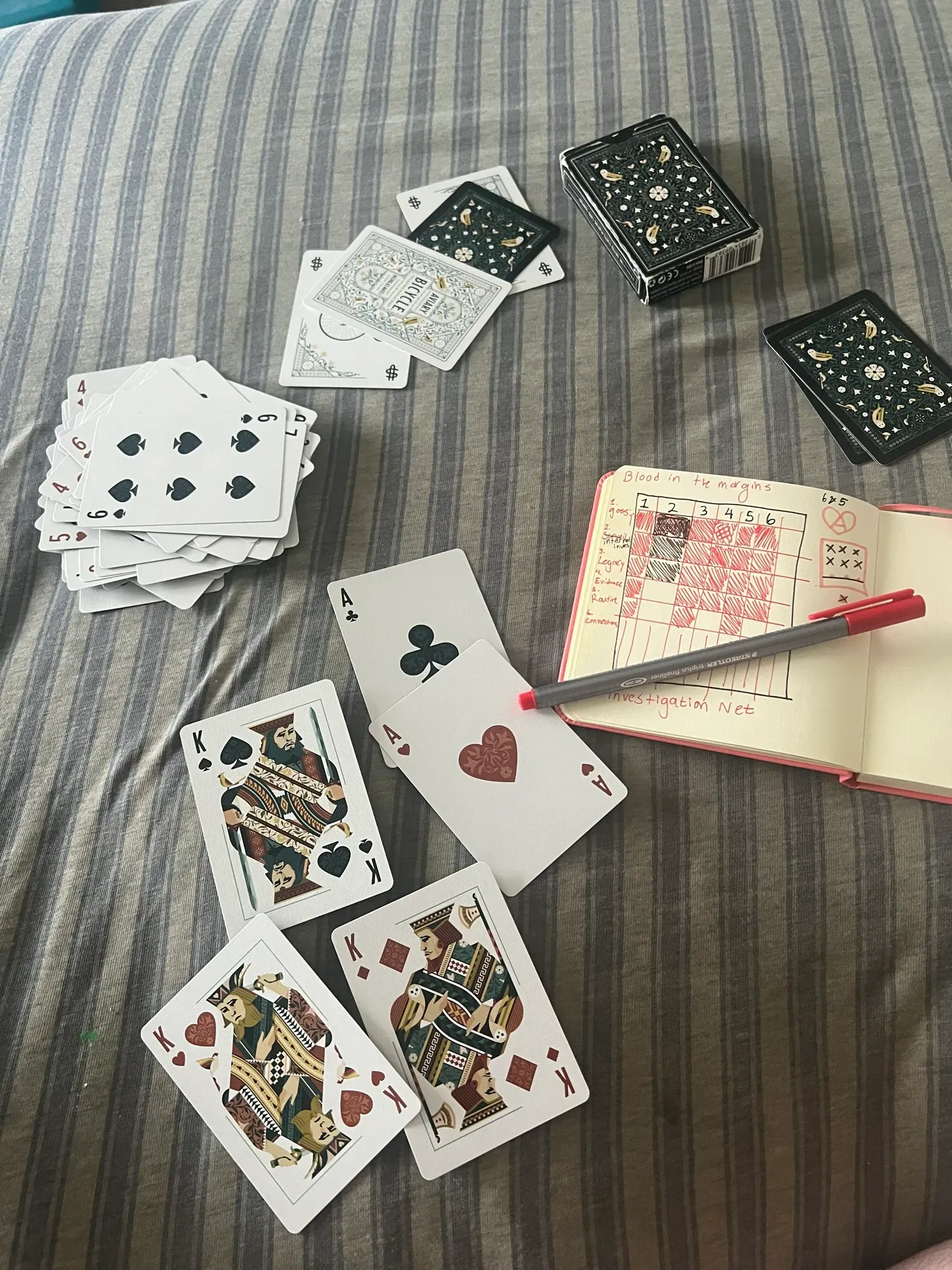
Kemper’s methodology, however, requires a self-conscious and critical engagement with the experience of an RPG. Kemper terms her practice “navigational play,” and identifies its two primary components as “steering [play] for liberation and reflective writing.”16 The latter can be involved: prior to the larp, for instance, players should “Investigate the character. Which proverbs, virtues and values, rituals, mentors, and artifacts mean the most to you? To them? What if anything is in common or dissimilar to your lived experience? To your latent or obvious fantasies?” and revisit these prompts following the larp with the aid of field notes taken during the experience. Similarly, Kemper suggests that after a larp navigational players should “Go through your write up and look for replicated behaviors that tie into your personal life. Evaluate your steering in comparison to what you looked for.”17 This is a difference in degree, and in mindset, from the typical approach to an RPG—it is a shift in perspective that asks the role-player to occupy two different stances, both in turn and (in the thick of role-play) nearly simultaneously. One is the typical perspective in RPGs: that of a player, more or less immersed in the fiction and the act of playing. The other is that of a spectator, and a critical spectator to boot.
Theatrical techniques: critical spectatorship for speculative worlding
Spectatorship, relatively little considered in RPGs, is a defining and widely discussed feature of theatre. The presence of an audience, as any theatre worker can attest, shifts the energy and focus of a performance, even one that has been thoroughly rehearsed. Theatre consists of more than just role-play; it requires that the role-play be witnessed, at minimum by one other person but ideally by a community to which the performance bears significance. The act of witnessing is so core to the practice that it constitutes its name, derived from the Greek theatron, originally used to refer to the audience’s seating area and meaning “viewing-place.”18 Even as postmodern theatre has troubled, questioned, and toyed with the binary division between viewer and viewed, its structuring logic remains core to the craft.
As Andrew Quick and Richard Rushton point out in Theatricality and the Arts, the existence of this division should not be mistaken for a claim that the spectator is passive; quite the opposite.19 In their view, “Spectatorship is, by definition, always active. [...] The [theatrical] artwork would not exist without the viewer’s being there, and to that extent the beholder or viewer is part of the artwork itself.”20 Even a performance that consists of a profoundly intimate character study implicates and is crafted around its community’s norms and values. When we feel sorrow and grief at the sight of Romeo and Juliet’s corpses, we affectively affirm values important to our society: the beauty of love, the value of youth, the senselessness and waste of violent death.
Frequently theatre serves to reinscribe cultural norms, but that need not be the case. Spectatorship implies response and critique. When a performance introduces ideas that are novel or controversial, it falls to the audience to discuss and debate them afterward. Indeed, the importance of discrimination, a critical spectatorial eye, is a recurrent topic throughout theatrical history. Sometimes the position of critic is assumed (and the reams of extant historical criticism of particular performances, or indeed of theatre as a form, suggest that someone is always willing to assume the position of critic). In other cases it is nurtured: the projects of theatre directors and theorists Bertolt Brecht and Augusto Boal both sought to cultivate more critical, thoughtful groups of spectators. Boal’s lifework, a methodology called Theatre of the Oppressed (TO), has been embraced by game designers and theorists because of its playful, interactive aesthetics; Gonzalo Frasca has called for “videogames of the oppressed” to engage with similar urgent social problems such as poverty, racism, and intolerance.21 The most well-known and widespread TO practice, Forum Theatre, bears a clear resemblance to RPGs: in Forum Theatre, professional actors present a short play that demonstrates a social problem, then invite audience members to intervene and take on roles in the drama to workshop solutions.
Bertolt Brecht’s techniques, broadly referred to as Epic Theatre, offer tools designed to foster a more critical form of conventional spectatorship. Epic Theatre seeks to cultivate what Brecht called averfremdungseffekt (abbreviated v-effekt; notoriously difficult to translate, sometimes rendered as “alienation effect” or, more accurately, “distancing effect”) that would disrupt the emotional involvement of the audience in favor of engaging their intellect. A communist reacting against the growing fascism of Germany in the 1920s and ’30s, Brecht distrusted the overwhelming power of emotional spectacle and sought to prompt audiences to consider how and why tragedies came about rather than grieve their inevitability. Staging techniques to cultivate v-effekt include now-common theatrical devices such as supertitles, direct address, and the irruption of song. In Brecht’s Mother Courage and Her Children, for example, scenes are preceded with title cards that explain the action of the scene, e.g.: “The same year sees the death of the Swedish king Gustavus Adolphus at the battle of Lützen. Peace threatens to ruin Mother Courage’s business. Mother Courage’s dashing son performs one heroic deed too many and comes to a sticky end.”22When we know that Mother Courage’s “dashing son” will commit one too many heroic deeds and come to a “sticky end,” the tension of the scene is (theoretically) redirected from what will happen to how it will happen—prompting us to consider the material circumstances that lead to his demise.
It’s important to be clear that Epic Theatre does not seek the elimination of emotional involvement on the spectators' part; only its reduction in favor of intellectual involvement. The ideal spectator of Mother Courage is moved by Mother Courage’s plight—but rather than being moved merely to weeping, they are moved to furious thought, to deep analysis about what has led to the tragedy of the play. The emotion fuels the process of thought, and spectators must be both sympathetic and analytical to fully understand the performance. The process thus operates in much the same way that Kemper’s navigational play does, marrying deep immersion and an analytical remove as we absorb the play happening before or around us.
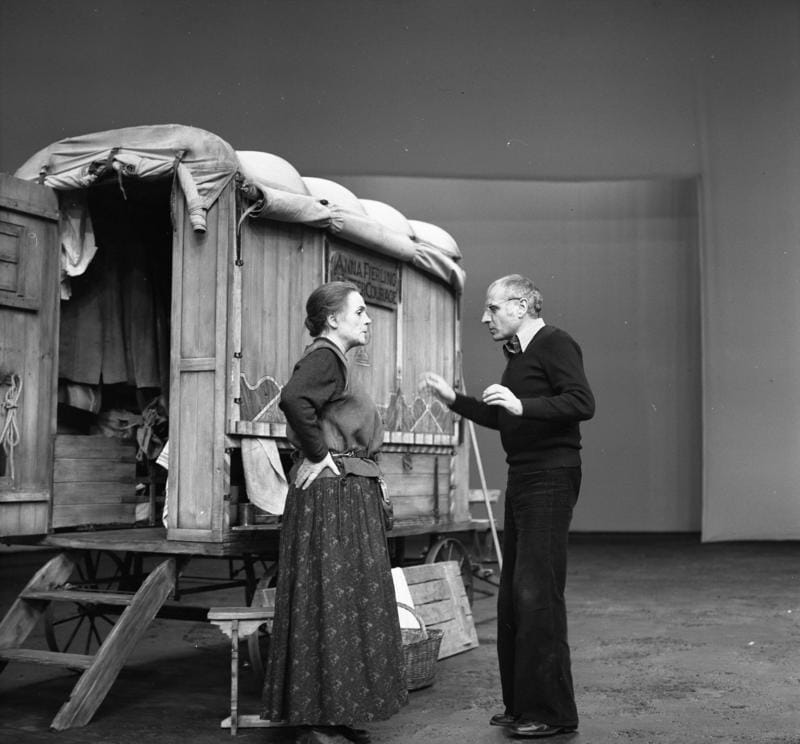
The fruit of this analytical remove can be (so goes Brecht’s theory) the imagination of another world—the audience’s projection of a new social reality for themselves. This is a process analogous to wyrding the self, but with a significant distinction: being outward-facing, oriented toward the spectator, the self that theatre is able to wyrd is that of a social collective rather than an individual. While wyrding the self (in Kemper’s proposal) is primarily participant-centered, an internal process rooted in a social event, theatre uses an individual, often partly internal process (the performance) to drive an external and socially oriented imagination. That (re)imaginary process is what Donna Haraway refers to as speculative worlding. Both theatre and RPGs offer a space in which players and spectators can imagine, rehearse, and critique other ways of being, whether founded in class relations, gender, technology, or even species. This imaginative space, Haraway suggests, is critical to liberatory imagination: “it is the patterning of possible worlds and possible times, material-semiotic worlds, gone, here, and yet to come.”23 The imagination of possible worlds is crucial precisely because the limits of our imaginings determine the limits of our social and political realities, which is why Haraway places such value on the work of feminist speculative fiction writers like Ursula Le Guin and Octavia Butler: “It matters what stories we tell to tell other stories with; it matters what concepts we think to think other concepts with.”24
The dialectic of critical spectatorship
In the case of role-playing games, to adapt Haraway’s phrasing, it matters what other selves we experience to experience our self with—and it matters how deliberately we do so. Theatre can offer RPGs techniques, some already in use, to temporarily estrange the player from the act of playing and promote critique. The practice of inhabiting two roles at once promotes a cycle that can best be understood as a dialectic: a dialogue between our embodied, emotionally and psychologically involved roles as players and our semi-removed, critical roles as spectators. Kemper’s outlines for navigational play point to this dialectic, offering anticipatory exercises pre-larp, guidance for engaged, self-aware, and observational play during the larp, and post-larp reflection prompts.25 As Kemper observes, this is not a casual process: “[Wyrding the self] is not easy, and requires pre-planning and commitment to co-create narratives collectively with your co-players while seeking liberation.”26 While both wyrding the self and speculative worlding are likely impossible without the requisite mindset and commitment from collaborators, the history of strategies to encourage critical spectatorship in theatre suggests that there are ways that designers of RPGs can encourage this mindset—many of which have already, in the independent and less mainstream areas of the field, been brought to bear.
RPGs—including their theatricalised manifestations as actual play—can engage with theatrical notions of critical spectatorship to both wyrd players’ selves on the individual level and engage in speculative, generative worlding on the societal one. In the latter case, layers of abstraction that repel immersion are a quasi-Brechtian tool that some games have already employed to shift focus away from the drama of individual player characters and towards systemic questions about the social, cultural, and economic structures in which we live. Many Powered by the Apocalypse games include injunctions for the players to make choices that they know don’t align with their characters’ health or happiness, putting them into harm’s way or deliberately making “bad” choices to explore their limits and generate drama.27 Games that deploy starkly different modes of play within the same narrative can foster critical distance through their mechanics, disrupting a player’s immersion to shift modes and explicitly direct the players’ focus away from their character’s perspective to, e.g., larger social or historical questions (as in Ben Robbins’s Microscope). World-building games more broadly offer a clear tool for speculative worlding, often played alongside or in preparation for more “traditional” RPGs that are character-focused. Constraints, too, breed critique—players’ chafing against the limitations imposed on them by a game’s world or rules can result in generative pushback and the prompt to imagine otherwise, as Jay Dragon (among others) has discussed.28
Similarly, theatre can engage its audience-participants in more interactive, playful ways to develop work that leverages the bleed associated with role-playing to go beyond discourse, instead generating experiential knowledge through play that has previously been the domain only of the performers. When attendees at the theatre are given the opportunity to participate and play, new and unexpected sources of drama can arise as they both create and critique an alternate reality. Some performers and designers have already begun exploring projects that blend these two forms. dog&pony DC’s Beertown, for instance, cast the audience as participants in a rural town hall meeting to decide which objects would be included or removed from the town’s time capsule, opening conversations about history, legacy, and the curation of American civic identity through playful argument and parody (“Do we know whether the gold was ethically mined?” one audience member asked about a gold-plated railroad spike from the 19th century, prompting delighted laughter). César Alvarez’s still-developing The Universe is a Small Hat similarly casts participants as refugees on a spaceship fleeing a dying Earth and uses cyborg characters and conflicts to offer experiences centered on transfeminist ideas of embodiment, coexistence, and fluidity. In both cases, the critical distance afforded by the theatrical frame and the bleed fostered by embodied role-playing create the dialectic cycle of deep engagement and critical distance that allows the participants to explore their roles not just affectively but critically as well.
Ultimately, the difference between theatre and RPGs may be as much in mindset as in form. The processes of role-playing and acting are so similar that at times the only difference seems to be the presence of an audience—a significant difference, to be sure, but the players of an RPG can also be considered a participant-audience. Perhaps the consideration itself—self-consciously regarding themselves as an audience as well as players—is the core of the shift that players undertake when they begin to engage with their games in a more theatrical and critical way. And perhaps theatre artists, too, could learn something from the vulnerability to bleed and the attention to play of RPGs. As theatrical scripts become more open to improvisation and mainstream RPGs experiment with more closed structures—dictating characters, rituals, and even story beats for the players to explore, as inYazeba’s Bed and Breakfast’s prewritten characters and defined episodes of play—perhaps the two will ultimately come to be seen as the close cousins they are. What, after all, is an RPG but a structure for spontaneous role-playing—much like a script? And what is a script, really, but a structure for play—a very precise one, but one that might be treated as a game nonetheless? There is a reason, after all, that we call both “play.”
Nicholas Orvis (he/him) is a director and dramaturg who received his Doctor of Fine Arts degree from the School of Drama at Yale. From 2014-2019 he served as Literary Associate and Resident Dramaturg for Premiere Stages at Kean University. Other dramaturgical work includes Yale Repertory Theater, Portland Stage Company, the Tank, the Yale Cabaret, and more. He is a former managing editor of Theater magazine, and his critical writing has appeared in Theater, 3Views on Theatre, and HowlRound. He co-produces (with Percival Hornak) Dungeons + Drama Nerds, an ongoing podcast investigating the intersections between theater and tabletop roleplaying games. His research interests include gameful theater, immersive and participatory theater, and early modern European drama, particularly the commedia dell’arte.
Bibliography
Baird, Josephine. “Role-Playing the Self – Trans Self-Expression, Exploration, and Embodiment in Live Action Role-Playing Games.”International Journal of Role-Playing, no. 11 (December 2021): 11.https://doi.org/10.33063/ijrp.vi11.285.
Bowman, Sarah Lynne. “Connecting Role-Playing, Stage Acting, and Improvisation.”Analog Game Studies2, no. 4 (2015).https://analoggamestudies.org/2015/05/connecting-role-playing-stage-acting-and-improvisation/.
Bowman, Sarah Lynne.The Functions of Role-Playing Games: How Participants Create Community, Solve Problems and Explore Identity. McFarland & Co, 2010.
Brecht, Bertolt.Mother Courage and Her Children. Edited by Katherine Hollander. Translated by John Willett. Methuen Drama, 2022.
Burgoyne, Suzanne, Karen Poulin, and Ashley Rearden. “The Impact of Acting on Student Actors: Boundary Blurring, Growth, and Emotional Distress.”Theatre Topics9, no. 2 (1999): 157–79.https://dx.doi.org/10.1353/tt.1999.0011.
Busselle, Kate. “De-Roling and Debriefing: Essential Aftercare for Educational Theatre.”Theatre Topics31, no. 2 (2021): 129–35.https://doi.org/10.1353/tt.2021.0028.
Canoza, Bianca a.k.a momatoes.ARC: Doom Tabletop RPG. Digital. Momatoes. Exalted Funeral Press, 2021.
Dragon, Jay. “Rules Are A Cage (and I’m a Puppygirl).”Medium, May 16, 2024.https://possumcreek.medium.com/rules-are-a-cage-and-im-a-puppygirl-69e8d569b2b6.
Dragon, Jay. “The Expressionist Games Manifesto.”Medium, September 10, 2025.https://possumcreek.medium.com/the-expressionist-games-manifesto-122d8afd1fe2.
Frasca, Gonzalo. “Videogames of the Oppressed.”Electronic Book Review, June 24, 2004.https://electronicbookreview.com/essay/videogames-of-the-oppressed/.
Hammer, Jessica. “Agency and Authority in Role-Playing ‘Texts.’” InA New Literacies Sampler, edited by Michele Knobel and Colin Lankshear. New Literacies and Digital Epistemologies, v. 29. P. Lang, 2007.
Haraway, Donna Jeanne.Staying with the Trouble: Making Kin in the Chthulucene. Duke University Press, 2016.
Hugaas, Kjell Hedgard. “Bleed and Identity: A Conceptual Model of Bleed and How Bleed-out from Role-Playing Games Can Affect a Player’s Sense of Self.”International Journal of Role-Playing, no. 15 (June 2024): 15.https://doi.org/10.33063/ijrp.vi15.323.
Hugaas, Kjell Hedgard, and Sarah Lynne Bowman. “Magic Is Real: How Role-Playing Can Transform Our Identities, Our Communities, and Our Lives.”Nordic LARP, March 9, 2021.https://nordiclarp.org/2021/03/09/magic-is-real-how-role-playing-can-transform-our-identities-our-communities-and-our-lives/.
Kemper, Jonaya. “The Battle of Primrose Park: Playing for Emancipatory Bleed in Fortune & Felicity.”Nordic Larp, June 21, 2017.https://nordiclarp.org/2017/06/21/the-battle-of-primrose-park-playing-for-emancipatory-bleed-in-fortune-felicity/.
Kemper, Jonaya. “Wyrding the Self.” InWhat Do We Do When We Larp?, edited by Eleanor Saitta, Johanna Koljonen, Jukka Särkijärvi, Anne Serup Grove, Pauliina Männistö, and Mia Makkonen. Solmukohta 2020, 2020.https://nordiclarp.org/2020/05/18/wyrding-the-self/.
Krasner, David. “I Hate Strasberg: Method Bashing in the Academy.” InMethod Acting Reconsidered: Theory, Practice, Future, edited by David Krasner. St. Martin’s Press, 2000.
Lehmann, Niels, and Janek Szatkowski. “Theatrical Virtuality - Virtual Theatricality: Virtual Narrative, Autonomous Agents and Interactivity in a Dramaturgical Perspective.” InVirtual Applications: Applications with Virtual Inhabited 3D Worlds. Springer-Verlag London Ltd., 2004.
Mackay, Daniel.The Fantasy Role-Playing Game: A New Performing Art. McFarland, 2001.
Montola, Markus. “The Invisible Rules of Role-Playing: The Social Framework of Role-Playing Process.”International Journal of Role-Playing, no. 1 (December 2008): 22–36.https://doi.org/10.33063/ijrp.vi1.184.
Quick, Andrew, and Richard Rushton. “Introduction: Questioning Theatricality.” InTheatricality and the Arts: Film, Theatre, Art, edited by Andrew Quick and Richard Rushton. Edinburgh University Press, 2024.https://www.degruyterbrill.com/document/doi/10.1515/9781399511674-002/html.
Sell, Mike. “The Dramaturgy of Tabletop Roleplaying Games.” InExperiential Theatres: Practice-Based Approaches to Training 21st-Century Artists, edited by William W. Lewis and Sean Bartley. Routledge, 2023.
Slater, William. “Theatron.” InThe Oxford Encyclopedia of Theatre and Performance. Oxford University Press, 2005.https://www.oxfordreference.com/display/10.1093/acref/9780198601746.001.0001/acref-9780198601746-e-3922.
Stanislavski, Konstantin.An Actor’s Work: A Student’s Diary. Translated by Jean Benedetti. Routledge, 2008.
Stenros, Jaakko, and Sarah Lynne Bowman. “Transgressive Role-Play.” InThe Routledge Handbook of Role-Playing Game Studies, edited by José P. Zagal and Sebastian Deterding. Routledge, 2024.
Wiles, David.Tragedy in Athens: Performance Space and Theatrical Meaning. Cambridge University Press, 1997.
Woodruff, Paul.The Necessity of Theater: The Art of Watching and Being Watched. Oxford University Press, 2008.
Yardley-Matwiejczuk, Krysia M.Role Play: Theory and Practice. Sage, 1997.
Footnotes
1 Sarah Lynne Bowman, “Connecting Role-Playing, Stage Acting, and Improvisation,”Analog Game Studies2, no. 4 (2015),https://analoggamestudies.org/2015/05/connecting-role-playing-stage-acting-and-improvisation/; Mike Sell, “The Dramaturgy of Tabletop Roleplaying Games,” inExperiential Theatres: Practice-Based Approaches to Training 21st-Century Artists, ed. William W. Lewis and Sean Bartley (Routledge, 2023).
2 Bowman calls this process “identity alteration,” while Markus Montola identifies this quality as an unwritten rule (the “character rule”) of role-playing. Sarah Lynne Bowman,The Functions of Role-Playing Games: How Participants Create Community, Solve Problems and Explore Identity(McFarland & Co, 2010); Markus Montola, “The Invisible Rules of Role-Playing: The Social Framework of Role-Playing Process,”International Journal of Role-Playing, no. 1 (December 2008): 24,https://doi.org/10.33063/ijrp.vi1.184.
3 Krysia M. Yardley-Matwiejczuk,Role Play: Theory and Practice(Sage, 1997), 1.
4 Konstantin Stanislavski,An Actor’s Work: A Student’s Diary, trans. Jean Benedetti (London and New York: Routledge, 2008), 48-51.
5 A dramaturgical analysis of the ways that the player-as-subject responds, including through embodiment, to digital RPGs can be found in Niels Lehmann and Janek Szatkowski, “Theatrical Virtuality - Virtual Theatricality: Virtual Narrative, Autonomous Agents and Interactivity in a Dramaturgical Perspective,” inVirtual Applications: Applications with Virtual Inhabited 3D Worlds(Springer-Verlag London Ltd., 2004), 49-88.
6 The different levels of RPG authorship are explored in Jessica Hammer, “Agency and Authority in Role-Playing ‘Texts,’” inA New Literacies Sampler, ed. Michele Knobel and Colin Lankshear, New Literacies and Digital Epistemologies, v. 29 (P. Lang, 2007).
7 Paul Woodruff,The Necessity of Theater: The Art of Watching and Being Watched(Oxford University Press, 2008).
8 Jaakko Stenros and Sarah Lynne Bowman, “Transgressive Role-Play,” inThe Routledge Handbook of Role-Playing Game Studies, ed. José P. Zagal and Sebastian Deterding (Routledge, 2024) 435 (box).
9 David Krasner describes the primacy of self-oriented work and the crucial focus on personal memory and emotion in Method training: “The Method actor creates an organic and imaginative performance by ‘experiencing’ or ‘living through the role’ […] For example, an actor may recall memories of abuse and use the ensuing anger to inform her work.” David Krasner, “I Hate Strasberg: Method Bashing in the Academy,” inMethod Acting Reconsidered: Theory, Practice, Future, ed. David Krasner (St. Martin’s Press, 2000) 5, 12.
10 One of the scholars who has done work on this since the 1990s is Suzanne Burgoyne; see, for instance, Suzanne Burgoyne et al., “The Impact of Acting on Student Actors: Boundary Blurring, Growth, and Emotional Distress,”Theatre Topics9, no. 2 (1999): 157–79. More recently, Kate Busselle has made similar arguments and provides an overview of the (sparse) calls for such work since the late 1980s in “De-Roling and Debriefing: Essential Aftercare for Educational Theatre,”Theatre Topics31, no. 2 (2021): 129–35,https://doi.org/10.1353/tt.2021.0028. Notably, Busselle uses terminology drawn from the work of J. L. Moreno’s psychodrama, a source used by role-playing practitioners as well.
11 Kjell Hedgard Hugaas, “Bleed and Identity: A Conceptual Model of Bleed and How Bleed-out from Role-Playing Games Can Affect a Player’s Sense of Self,”International Journal of Role-Playing, no. 15 (June 2024): 15,https://doi.org/10.33063/ijrp.vi15.323; Kjell Hedgard Hugaas and Sarah Lynne Bowman, “Magic Is Real: How Role-Playing Can Transform Our Identities, Our Communities, and Our Lives,”Nordic LARP, March 9, 2021,https://nordiclarp.org/2021/03/09/magic-is-real-how-role-playing-can-transform-our-identities-our-communities-and-our-lives/; Josephine Baird, “Role-Playing the Self – Trans Self-Expression, Exploration, and Embodiment in Live Action Role-Playing Games,”International Journal of Role-Playing, no. 11 (December 2021):https://doi.org/10.33063/ijrp.vi11.285.
12 Jonaya Kemper, “The Battle of Primrose Park: Playing for Emancipatory Bleed in Fortune & Felicity,”Nordic Larp(blog), June 21, 2017,https://nordiclarp.org/2017/06/21/the-battle-of-primrose-park-playing-for-emancipatory-bleed-in-fortune-felicity/.
13 Jonaya Kemper, “Wyrding the Self,” inWhat Do We Do When We Larp?, ed. Eleanor Saitta et al. (Solmukohta 2020, Helsinki: Solmukohta 2020, 2020), 213,https://nordiclarp.org/2020/05/18/wyrding-the-self/.
14 Ibid. 224.
15 Ibid. (see especially Chart 1, 216-218).
16 Ibid. 215.
17 Ibid. 216-217.
18 William Slater, “Theatron,” inThe Oxford Encyclopedia of Theatre and Performance(Oxford University Press, 2005),https://www.oxfordreference.com/display/10.1093/acref/9780198601746.001.0001/acref-9780198601746-e-3922.
19 Andrew Quick and Richard Rushton, “Introduction: Questioning Theatricality,” inTheatricality and the Arts: Film, Theatre, Art, ed. Andrew Quick and Richard Rushton (Edinburgh University Press, 2024),https://www.degruyterbrill.com/document/doi/10.1515/9781399511674-002/html, 5-11.
20 Ibid., 5, 8.
21 Gonzalo Frasca, “Videogames of the Oppressed,”Electronic Book Review, June 24, 2004,https://electronicbookreview.com/essay/videogames-of-the-oppressed/.
22 Bertolt Brecht,Mother Courage and Her Children, ed. Katherine Hollander, trans. John Willett (Methuen Drama, 2022), 57.
23 Donna Jeanne Haraway,Staying with the Trouble: Making Kin in the Chthulucene(Duke University Press, 2016), 31.
24 Ibid. 118.
25 Kemper, “Wyrding the Self,” 216-218.
26 Ibid. 224.
27 E.g. John Harper’sBlades in the Dark(2017); Spencer Moore’sChasing Adventure(2024).
28 See Jay Dragon, “The Expressionist Games Manifesto,”Medium, September 10, 2025,https://possumcreek.medium.com/the-expressionist-games-manifesto-122d8afd1fe2as well as Jay Dragon, “Rules Are A Cage (and I’m a Puppygirl),”Medium, May 16, 2024,https://possumcreek.medium.com/rules-are-a-cage-and-im-a-puppygirl-69e8d569b2b6.