
Disability, Dignity, and Hope in Apocalypse Keys
Luka Brave writes about Apocalypse Keys' monstrous PCs as a metaphor for the disability community, and hones in on Robert Perske's concept of "dignity of risk," which states that vulnerable groups, should be allowed the freedom to weigh the potential risks of a choice for themselves.
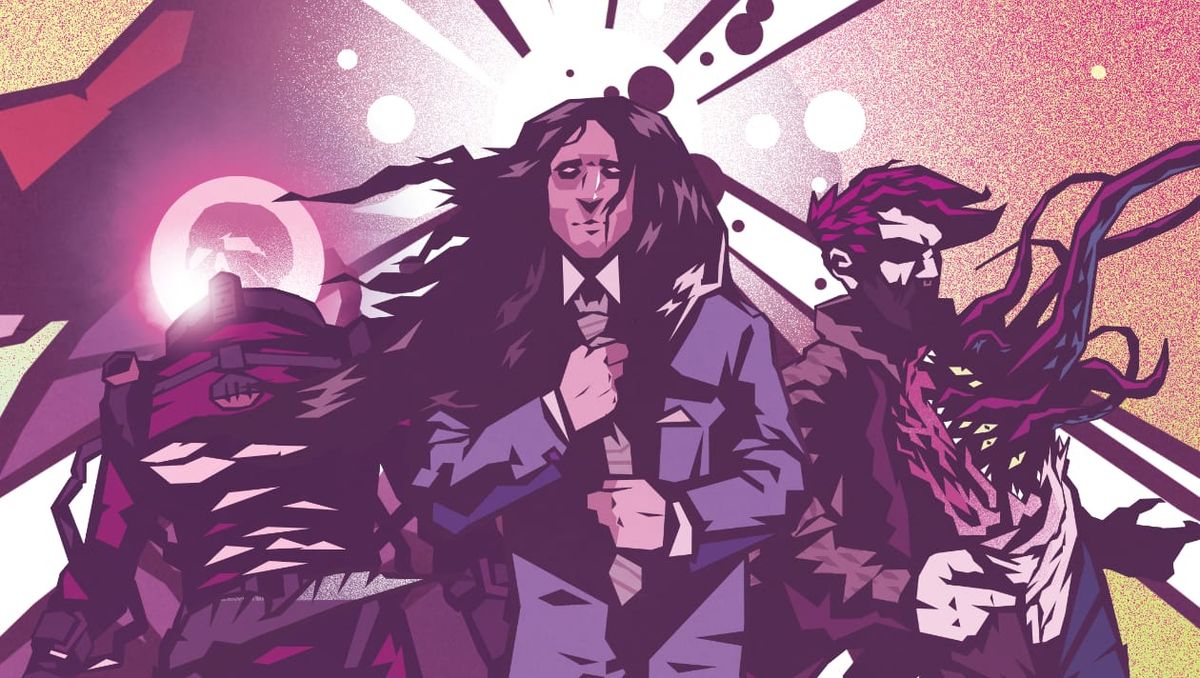
Our next first look into Issue One is Luka Brave's review of Apocalypse Keys by Rae Nedjadi. Brave writes about Apocalypse Keys' monstrous PCS as a metaphor for the disability community, and hones in on Robert Perske's concept of "dignity of risk," which states that vulnerable groups, often over-controlled and overprotected, should be allowed the freedom to weigh the potential risks of a choice for themselves and decide whether that course of action is worthwhile.
“There can be a dehumanizing indignity in safety.”
- Robert Perske, 1972
The player characters of Rae Nedjadi’s Apocalypse Keys (2022) are not only monsters, but the most monstrous. The organisation DIVISION employs these Omen-class monsters to be used, surveilled, and put on the front line of the apocalypse again and again.
Despite these characters being incredibly diverse in background, home-world, appearance, power, personality, and needs, they all fall under this single label. And yet, nowhere in the game does it say these characters chose the label of “monster” for themselves. It was put upon them by humans on an Earth very similar to our own—humans who ignore, isolate, segregate, despise, and use them (if they even know these “monsters” exist). It is difficult to look at a class of people the game describes as “vulnerable characters in a position to hurt and be hurt”1 in a world “that can never truly accept [them]2”, yet who still try to protect it at all costs, without seeing a mirrored image of myself and the disability community staring back.
Disabled people in our world, and “monsters” in the world of Apocalypse Keys, are united in our status as “othered.” Somehow, we occupy both sides of the dichotomy: weak, needy, and dependent, yet also powerful transgressors exerting control over the hapless “normal” people around us. We’re seen as incapable of integrating into regular society, then have our identities ignored or denied when we often do.
Like the monsters of Apocalypse Keys, disabled people are facing down Doom’s Door—our own series of apocalypses that include climate crisis, rising international fascism, slashed healthcare and support services, eugenics and bigotry, an ongoing pandemic, and more. The monstrous PCs of Apocalypse Keys must put themselves on the line again and again, drawing on their powers and relationships with one another, to stop the Harbingers from ending the world. And yet, despite appearances, Apocalypse Keys is a hopeful game.
Though the plot arcs of Apocalypse Keys may revolve around a series of dangerous threats, new Harbingers with their own potential apocalypses around every corner, early on, the game asks, “you’re not going to let that happen, are you? You’ve come to love this world, even if it doesn’t completely accept you”.3 This game is not about being a monster and fighting threats—Apocalypse Keys is a game about saving the world.
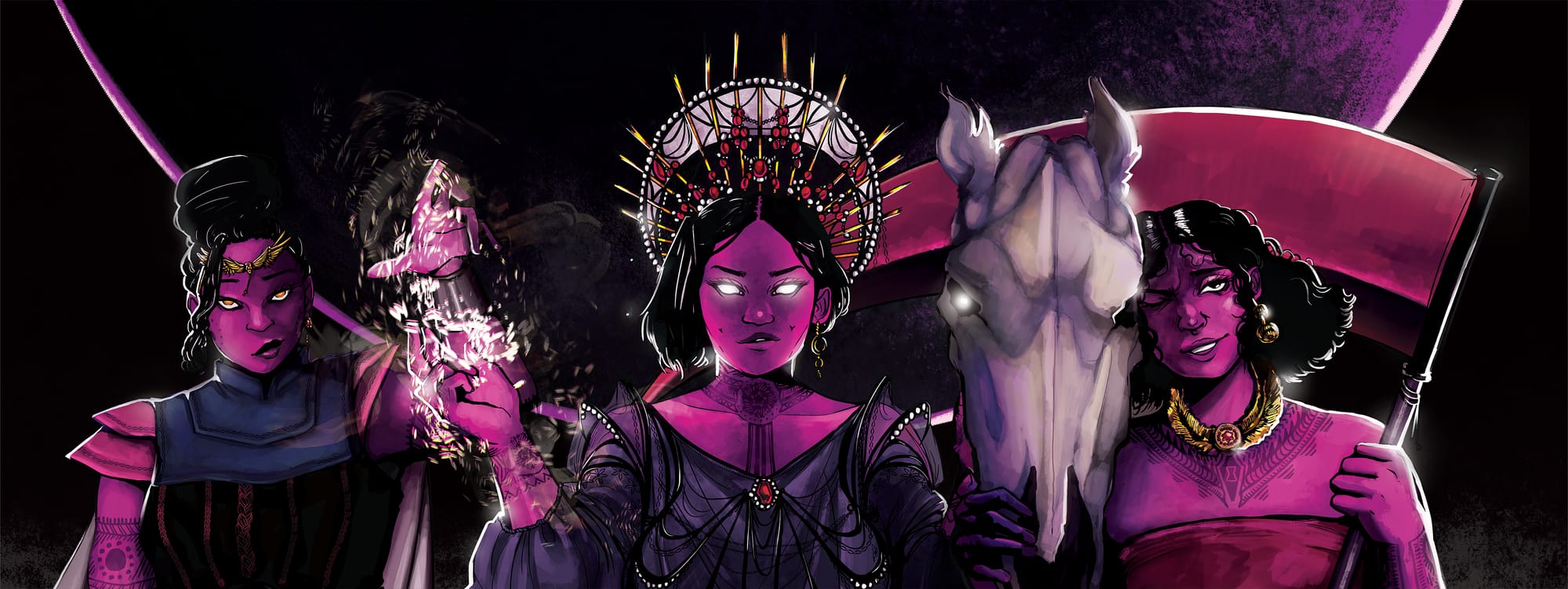
Scholar and bioethicist Rosemarie Garland-Thomson regards disability as a “social branding” used to inflict stigma on the disabled community by those who consider us an “unsettling collection of ‘abominations of the body’”.4 Drawing on the work of W.E.B. DuBois and Erving Goffman, she states that disabled people are among the marginalised groups who experience double-consciousness. This double-consciousness causes a marginalised individual to constantly view themself through the eyes of others, balancing their own self-perception with the stereotypes, assumptions, and the treatment of dominant groups.
The PCs of Apocalypse Keys are “conflicted and complex, each yearning to connect meaningfully to the monsters and humans around them”,5 and yet must always grapple with these dominant perceptions. Non-player characters in Apocalypse Keys, most often human employees of the apocalypse-fighting DIVISION, may tolerate, like, or even love the monsters. Whether their relationships are platonic, familial, romantic or sexual, or merely cooperative, the human employees of DIVISION and the Omen-class monstrous PCs will always be very different. The humans, to one degree or another, chose between a normal life and a life of secrecy, danger, and risk. The PCs, on the other hand, chose between a life of secrecy, danger, and risk by living among the mundane in a world that “tries to pretend monsters are not real”,6 and a life with DIVISION: secrecy, danger, risk, and meaningful work.
Playtest Material is a young magazine which needs reader support. If you are enjoying this article, consider subscribing to our print magazine, which is what allows us to pay our writers and maintain hosting fees. You still have a few weeks to subscribe in order to receive Issue One in your mailbox when it releases. If that's too much to ask right now, consider signing up for updates or even grabbing a supporter subscription here on our website.
Activist and author Robert Perske, in a foundational 1972 essay on disability rights, stated there is “such a thing as human dignity in risk”.7 He fiercely argued that disabled people are both capable of and better off for being allowed to make our own decisions on what we want, what we’ll do to try to get it, and what we’re willing to suffer if that striving for our desires takes a bad turn. The resulting concept of “dignity of risk” means, put simply, “respecting or honoring an individual’s choices or decisions even in the face of potential harms”.8
Vulnerable groups such as the disability community, often over-controlled and overprotected, should be allowed to weigh the potential risks of a choice and decide for themselves if those possible harms are worth it to accomplish a goal that holds meaning to them. Sometimes, these harms may come from our own minds and bodies struggling with the goals we’re striving for, and other times, circumstance affects us just as it would any abled person. The same is true for the PCs of Apocalypse Keys. Sometimes, a monster’s power is not as controlled as they thought, and pushing themself too hard hurts themself or the people around them. Other times, outside forces step in to make a plan go awry.
Vulnerable groups such as the disability community, often over-controlled and overprotected, should be allowed to weigh the potential risks of a choice and decide for themselves if those possible harms are worth it to accomplish a goal that holds meaning to them.
While many TTRPGs include an element of risk, often with randomisation mechanics such as dice rolls or drawing cards, Apocalypse Keys goes a step further in baking risk-taking into the rules of the game, asking players to judge the potential benefits and harms of making a Move for themselves.
Like many Powered by the Apocalypse games, the central resolution mechanic of Apocalypse Keys involves rolling two 6-sided dice and adding them together. If your dice add up to 7 or less, your action fails. Above 7, the game splits from the usual framework to do something unique. An ideal roll falls between 8 and 10, while any higher nets you a Disastrous Success. You’ll accomplish your goal, but the characters will suffer from “overextending themselves or losing control of their power”.9
However, the outcome of these rolls is not entirely random. Players spend a meta-currency known as Darkness Tokens to alter their outcome. You gain these tokens by “embodying the emotional themes” of your character’s playbook10: leaning into your PC’s challenges, traumas, and desire to connect with the people around them. For each Darkness Token spent, a player raises the outcome of their roll by 1, hopefully bringing a failure into the ideal success range of 8 to 10.
The trick—and the thing that makes this mechanic so relevant to dignity of risk—is that the player must declare how many Darkness Tokens they will spend before they roll. The Darkness Tokens represent “how much of [the PC’s] supernatural power they’ll be drawing from, and how far they’re willing to push themselves.” The game immediately continues with a warning: “be careful! If you roll too high, you’ll go too far and lose control. This means suffering disastrous success and facing the consequences”.11
So, why shouldn’t players just spend as few tokens as possible, only adding one when rolls feel too important to potentially fail? Well, there’s a mechanic for that as well. Letting Darkness Tokens pile up, and along with them the in-universe emotional challenges your character is grappling with, causes your PC to be Torn Between. Triggering this effect can lead to three potential outcomes: an emotional outburst where a PC may harm theirself or others, a PC choosing to minimise theirself to conform to the expectations of humans, or, the PC can rely on the connection they have with the people around them to ground theirself and re-regulate. Many disabled people wouldn’t need the similarities of these options and our own oft-lived experiences pointed out.
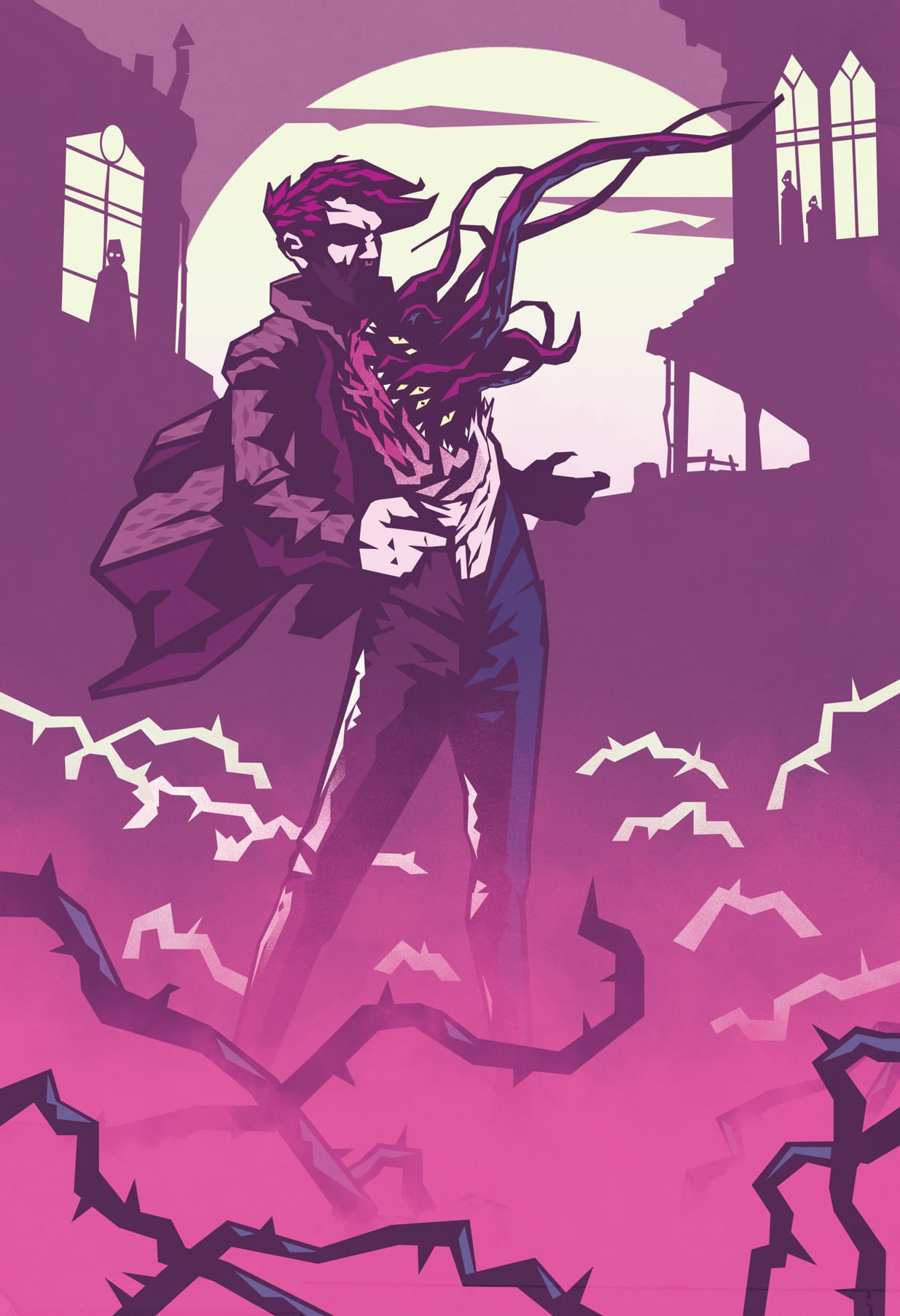
Garland-Thomson says that it is the shared human experience to know what happened yesterday, but not be able to know what will happen tomorrow. She says of this uncertainty that “the withdrawal of the divine hand from the modern world has cursed us with the responsibility for determining tomorrow’s consequences in today’s actions.” What we may call self-government, freedom of choice, or autonomy, she says is a “moral obligation to self and others”.12 Perske argued over 50 years ago that dignity comes with the ability to make choices despite the potential for harm, and the people around you being willing to honour your agency in making those choices.
When the supposedly monstrous PCs of Apocalypse Keys choose to push themselves, sometimes to the brink of harm, though often past it, in order to protect their home and all those they love, they exercise their inherent right to dignity of risk. Though in our world, disabled people may find our internal resources taxed more easily than the abled people around us, may more commonly suffer harms while striving for the things we want in life, ultimately, our right to choose our own goals and decide how far we’ll push ourselves to achieve them, deserves to be respected.
Apocalypse Keys, a game where “Your relationships mean everything”,13 is about attempting, to the best of your ability, to determine tomorrow’s consequences with today’s dice rolls, in a way that honours the responsibility you have to the world and the people around you. Apocalypse Keys asks you to play characters who are other in a world “built for the mundane,” characters who must “accept they’ll make mistakes while still striving to be better.” Disabled players will see themselves and find themselves in these monsters, “bound by fate, love, and power” as they hold onto “the brightest hope in the darkest despair”.14 Though the mundane in the world ofApocalypse Keys may see these characters as monstrous—as merely a collection of abominations—the game reassures us this is not the reality. The Omen-class monsters of Apocalypse Keys are, though different, powerful, sometimes terrifying, often hard to understand, also “aching and human”.15
Disabled players will see themselves and find themselves in these monsters, “bound by fate, love, and power” as they hold onto “the brightest hope in the darkest despair”
As the real world is pulled further into crisis, and disabled people, along with many of our marginalized siblings, face down an uncountable series of Doom’s Doors, Apocalypse Keys can help us practice our inherent right to dignity of risk. Making choices, facing consequences, relying on the solidarity and care of those around us, and learning from our mistakes to fight again another day, Apocalypse Keys reminds disabled players of our agency, our potential for powerful and meaningful change, and our responsibility to ourselves and those around us. Apocalypse Keys lets disabled players exercise our “capacity for imaginative, potentially revolutionary, hoping”.16
In Apocalypse Keys’ own words:
You may become the force that finds the light in the dark and defies all odds to save this world.
You have so much power, but what you truly have is this: magic and fear. Healing and hope. It will have to be enough.17
Author
Luka Brave of Psychhound Games is an award-nominated designer who's been publishing TTRPGs since 2022 and playing for nearly a decade. As a designer, his focus is on bespoke systems, especially those with unusual mechanics such as the weather, music playlists, or social media bots. He graduated last summer with a Master's in Writing Studies and Educational Psychology, focusing on applied analog games. Luka's long-term goal is increased awareness and use of transformative TTRPGs for mental wellness and education, a niche they developed a passion for while teaching undergraduates and doing disability-focused social work. Currently, Luka is developing a full-length multiplayer TTRPG that helps players grapple with and heal from complex trauma, called Spiritkeep. You can find more at psychhound.com.
Footnotes
1 Nedjadi, Rae, Apocalypse Keys (Maryland: Evil Hat, 2022) p.7
2 Nedjadi, Apocalypse Keys p.27
3 Nedjadi, Apocalypse Keys p.7
4 Garland-Thomson, Rosemarie.“What Du Bois and I Know About Dignity of Risk.”Perspectives in Biology and Medicine 65, no.2 (2022) p.173,177
5 Nedjadi, Apocalypse Keys p.8
6 Nedjadi, Apocalypse Keys p.8
7 Perske, Robert, The Dignity of Risk and the Mentally Retarded. (Mental Retardation 1972) p.26
8 "Editor's Introduction: Disability, Social Justice, and Dignity of Risk at 50 Years."Perspectives in Biology and Medicine65, no. 2 (2022).p.157
9 Nedjadi, Apocalypse Keys p.17
10 Nedjadi, Apocalypse Keys p.22
11 Nedjadi, Apocalypse Keys p.16
12 Garland-Thomson, What Dubois and I Know About Dignity of Risk p.177
13 Nedjadi, Apocalypse Keys p.9
14 Nedjadi, Apocalypse Keys p.8
15 Nedjadi, Apocalypse Keys p.8
16 Kawitzky, Felix Rose. "Magic Circles: Tabletop Role-Playing Games as Queer Utopian Method." Performance Research 25, no. 8 (2020): p135.
17 Nedjadi, Apocalypse Keys p.7
References
Garland-Thomson, Rosemarie. 2022. “What Du Bois and I Know About Dignity of Risk.” Perspectives in Biology and Medicine 65 (2): 171-178. doi:10.1353/pbm.2022.0012.
Kawitzky, Felix Rose. 2020. “Magic Circles: Tabletop Role-Playing Games as Queer Utopian Method.” Performance Research 25 (8): 129-136. doi:10.1080/13528165.2020.1930786.
Mukherjee, Debjani. 2022. “Editor’s Introduction: Disability, Social Justice, and Dignity of Risk at 50 Years.” Perspectives in Biology & Medicine 65 (2): 157–61. doi:10.1353/pbm.2022.0010.
Nedjadi, Rae. 2022. Apocalypse Keys. Maryland: Evil Hat.
Perske, Robert. 1972. “The Dignity of Risk and the Mentally Retarded.” Mental Retardation.